

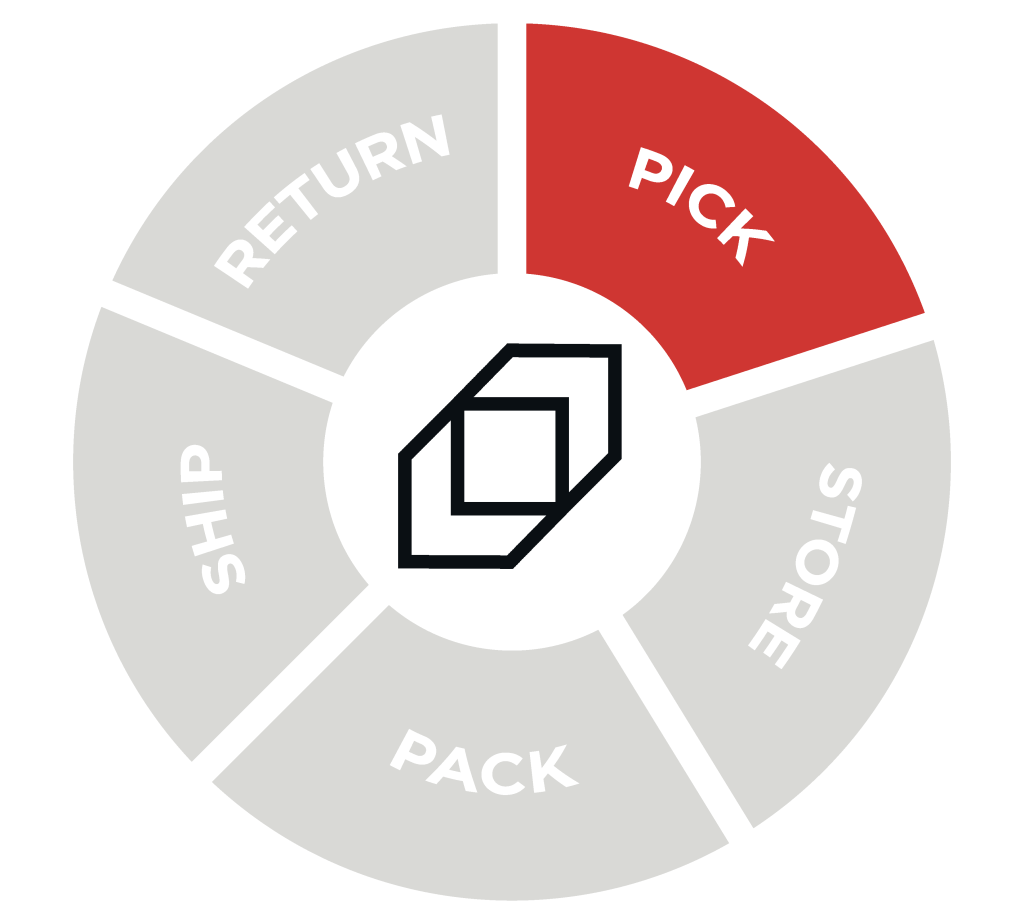
Pick is one of Lesters’ five pillars of supply chain efficiency, alongside Store, Pack, Ship and Return. Together, these pillars form the framework we use to identify opportunities and provide solutions across every stage of a customer’s supply chain.
The first stage, Pick, is about creating an efficient picking environment in which warehouse teams can locate and retrieve the right products quickly and accurately. The packaging and storage solutions used at this stage can directly affect productivity, space utilisation and operating costs.
When you’re looking for ways to improve warehouse performance, pick bin sizing might not be the first thing that comes to mind. But when pickers are handling hundreds or even thousands of items every day, the size and layout of each bin can make a noticeable difference.
Bins that are too large can waste valuable shelf space, while bins that are too small may need frequent replenishment. The wrong choice can also make products harder to identify, reach and retrieve, slowing down the fulfilment process and the speed at which your customer receives their order.
As part of an effective ‘Pick’ process, getting the bin size right helps create a picking area that is faster, easier to manage and more cost-effective. Here’s how.
Why does pick bin size matter to the ‘Pick’ Pillar?
A well-organised picking area should make it easy for warehouse teams to find and retrieve the right products without unnecessary searching, reaching or walking.
However, simply placing every product into the same-sized bin rarely makes the best use of the available space. Stock-keeping units (SKUs) differ in size, weight, and demand, so storage should reflect these differences.
For example, a small, fast-moving product may need a compact bin with enough capacity to avoid constant replenishment. Meanwhile, a larger item sold less frequently may need more space but can be positioned away from the busiest picking areas.
Matching the bin to the product helps improve warehouse picking efficiency while making better use of the surrounding shelving and racking. This makes pick bin sizing a fundamental part of the ‘Pick’ pillar, supporting faster and more consistent movement through the first stage of the fulfilment process.
Faster access means faster picking
Even small delays can add up during a busy shift. If a picker has to search through an oversized bin, move other products or reach into a container that is too deep, each order takes slightly longer to complete.
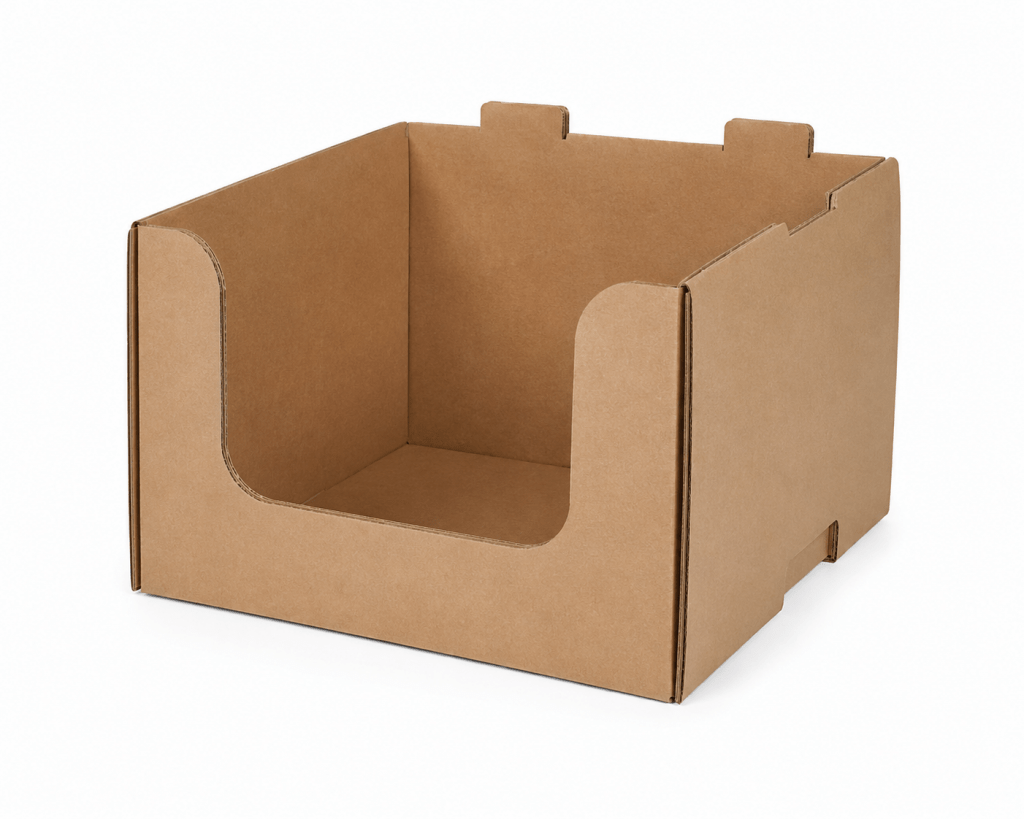
Correctly sized corrugated pick bins keep products visible and accessible. Their open design and lowered front panel allow pickers to identify and retrieve stock quickly, without needing to remove the bin from the shelf.
Bin sizing can also help create a more logical pick face. High-demand products can be placed in accessible positions with enough stock available to reduce replenishment interruptions. Slower-moving or bulkier products can then be stored in appropriately sized bins elsewhere.
The result is a smoother picking process with less time spent searching for products or correcting mistakes. By addressing these small sources of delay, the ‘Pick’ pillar can help warehouses increase productivity across every shift.
Make better use of warehouse space
Space is one of the most valuable resources in any warehouse, yet shelves are often filled with bins that leave gaps, extend beyond the racking or contain more empty space than stock.
Good warehouse space optimisation is about using the capacity you already have more effectively.
Choosing bins based on your shelf dimensions and product sizes can help you:
- Reduce unused space within individual bins
- Fit more product lines into each shelving bay
- Make better use of shelf depth and height
- Keep stock organised without overcrowding
- Create a clearer and more consistent picking layout
Instead of trying to make standard bins fit an existing system, bespoke packaging can be designed around the dimensions of your racking and the products being stored.
This is particularly useful when a warehouse handles a varied range of SKUs. Using a mixture of bin sizes allows each section of racking to be configured more efficiently without forcing every product into the same format.
The five pillars work together, so improvements made at the ‘Pick’ stage can also support the stages that follow. A more organised picking area, for example, can help products move into the ‘Pack’ and ‘Ship’ stages more smoothly.
Support more accurate order picking
Speed matters, but not if it leads to more mistakes.
Poorly sized or overcrowded bins can make it difficult to separate similar products. Items may become mixed, labels can be obscured and pickers may select the wrong SKU.
Correctly sized bins create clearer boundaries between product lines. They can also be customised with printed SKUs, barcodes, dividers or labels, helping pickers confirm they have selected the right item.
This can be particularly valuable in busy logistics and fulfilment environments, where large numbers of orders and product variations are processed every day.
A clear pick face supports both manual picking and Warehouse Management System (WMS) processes, making it easier to scan, track and manage stock accurately.
Accuracy at the ‘Pick’ stage is essential because an incorrect item can create additional costs and delays throughout the remaining pillars, from packing and shipping to processing a return.
Control warehouse storage costs
The wrong sizing can increase warehouse storage costs in several ways. Wasted shelf space may create the impression that more racking or a larger facility is needed, while undersized bins can increase the labour involved in replenishment.
Choosing the right sizes can help reduce these avoidable costs by:
- Increasing the number of SKUs stored within the existing footprint
- Reducing unnecessary replenishment journeys
- Improving picking productivity
- Limiting wasted storage capacity
- Making seasonal changes easier to manage
Corrugated pick bins can also be supplied flat-packed, so unused bins require less storage space than pre-assembled rigid alternatives. They can be assembled when needed and collapsed during quieter periods, making them a flexible option for businesses experiencing seasonal demand.
If a bin becomes worn or damaged, it can also be replaced individually rather than requiring a more expensive storage system to be changed.
Looking at storage costs as part of the ‘Pick’ pillar can reveal practical savings that may otherwise be overlooked, particularly when inefficiencies are spread across hundreds or thousands of individual bins.
What should you consider when choosing pick bin sizes?
There is no single bin size that will suit every warehouse or product.
To strengthen the ‘Pick’ stage of your supply chain, consider the following factors before deciding on your bin sizes:
Product dimensions
Measure the length, width and height of the products being stored. Leave enough room for pickers to retrieve them comfortably without creating excessive empty space.
Product weight
Heavier products may require stronger corrugated material, reinforced edges or a double-wall construction.
Rate of demand
Fast-moving products generally need enough capacity to limit frequent replenishment. Slower-moving items may only require a smaller pick face.
Racking dimensions
Measure the available shelf width, depth and height. The bin should fit securely without extending into aisles or leaving unnecessary gaps.
Picking method
Consider whether products are picked manually, transported on trolleys or integrated with conveyors, scanners or other automated systems.
Labelling requirements
Bins may need space for barcodes, SKU information or other identifiers. Clear labelling should remain visible when the bins are positioned on the shelf.
Review your pick bins as stock changes
Pick bin sizing should not be treated as a one-off decision. Product ranges, sales patterns and order volumes change over time, so a setup that once worked well may gradually become less efficient.
Regularly review:
- Which bins are frequently empty
- Which products need constant replenishment
- Where unused shelf space is appearing
- Whether items are difficult to access
- Which areas experience the most picking errors
- How seasonal demand affects bin requirements
These checks can highlight opportunities to resize bins, reposition products or reorganise the pick face before inefficiencies become more costly.
Reviewing the performance of the ‘Pick’ pillar regularly ensures that your picking environment continues to support the wider supply chain as stock profiles and customer demand evolve.
Strengthen Your ‘Pick’ Pillar With Lesters Packaging
The right pick bin sizing can improve picking speed, reduce wasted space and help keep warehouse costs under control. More importantly, it creates a working environment that is easier for warehouse teams to navigate every day.
As the first of Lesters’ five pillars of supply chain efficiency, ‘Pick’ establishes the foundations for a smoother journey through Store, Pack, Ship and Return. When products can be located and retrieved efficiently, each subsequent stage is better positioned to perform effectively.
At Lesters, we design and manufacture corrugated pick bins in standard and bespoke sizes to suit your products, racking and picking processes. Options include custom dimensions, internal dividers, handle cut-outs and printed barcodes or SKU information.
Our five-pillar framework allows us to look beyond individual products and consider how the right solution can improve efficiency across your wider supply chain. Whether you are reorganising an existing picking area or planning a larger warehouse rollout, our team can help you find a solution that fits your operation.
Contact Lesters to discuss your warehouse requirements.