
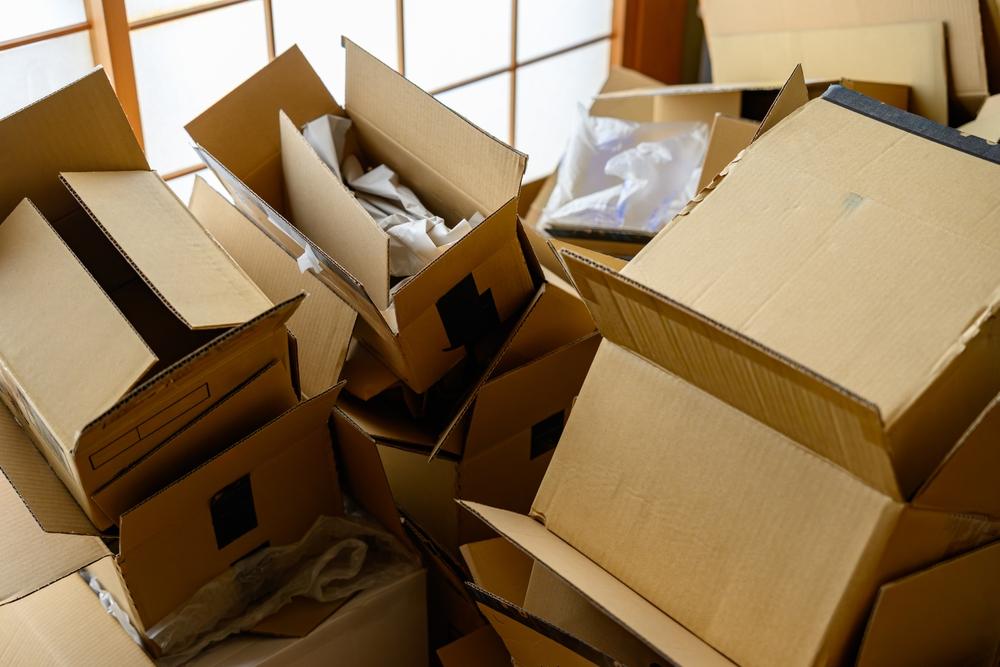
Open a delivery and you may find a relatively small product sitting inside an oversized cardboard box, surrounded by layers of void fill.
It might feel reassuringly protected, but is all that packaging really necessary?
Using more packaging does not always mean better protection. If you’re using oversized boxes, unnecessary materials and inefficient designs, this can increase costs, take up valuable warehouse space and reduce the number of products that fit onto a pallet or vehicle.
At the same time, reducing packaging without considering how it performs can leave products vulnerable to damage. The answer is not simply to use less. It is to use the right amount, in the right way.
That is where packaging optimisation comes in.
What is packaging optimisation?
Packaging optimisation is the process of reviewing and improving your packaging so that it protects the product while using materials, space, time and money more efficiently.
It considers much more than the box itself. Effective packaging needs to work throughout the entire supply chain, from packing and storage to palletisation, transport, delivery and disposal.
The aim is to find the best balance between:
- Product protection
- Material use
- Box size and weight
- Packing time
- Pallet and vehicle capacity
- Transportation costs
- Customer experience
Good packaging optimisation removes what is unnecessary without compromising what matters. We offer bespoke cardboard packaging solutions to suit your requirements to ensure no packaging materials are wasted. Take a look at our product range to see how we can help you.
How can you tell if you are using too much packaging?
Here are some of the signs worth looking out for:
Your boxes contain a lot of empty space
If there are large spaces around your boxed products, the packaging may be bigger than it needs to be. That space often has to be filled with paper, foam, bubble wrap or another protective material. You are then paying for a larger box, additional void fill and the transportation of empty air.
A better-fitting cardboard box may reduce the need for extra materials while holding the product more securely.
You use several layers of protection
Multiple protective layers can sometimes be necessary, particularly for fragile, heavy or high-value products. However, they can also indicate that the outer packaging is not doing enough of the work.
A stronger or more carefully designed corrugated cardboard structure could offer the required protection with fewer separate components.
Your packaging range is difficult to manage
Having many similar box sizes can make ordering, storage and packing more complicated.
Employees may struggle to choose the right box, leading them to select packaging that is larger than necessary. Too many variations can also take up warehouse space and make stock control harder.
Reviewing and streamlining the range may improve packaging efficiency without forcing very different products into an unsuitable, one-size-fits-all box.
Products do not fit efficiently onto pallets
A box can fit its product well but still create problems further along the supply chain.
Packaging dimensions that do not work efficiently with standard pallet sizes can leave unused gaps between boxes. This may limit the number of products that can be transported in each load.
Optimising the dimensions for palletisation can help you make better use of the available space.
Packing takes longer than it should
Complicated boxes, excessive taping and multiple inserts can slow down packing teams.
Even a small delay per order can add up when repeated throughout the day. Packaging that is quick to assemble and easy to pack can support faster, more consistent operations.
You are experiencing avoidable product damage
Adding more packaging does not necessarily prevent damage to your products.
Products may move inside an oversized box, collide with each other and be damaged – especially along vulnerable product edges and corners. In these cases, a better fit or improved internal package structure may provide more protection than another layer of void fill.
Optimisation looks at why damage is happening before deciding how to prevent it.
How do you optimise packaging?
Every product and supply chain is different, but the following steps provide a useful starting point.
Step 1: Review your current packaging
Begin by looking at what you already use.
Measure the product and its box, note the materials involved and record how long the pack takes to assemble. Look at the amount of empty space and whether additional fillers, tape or protective components are required.
You should also consider what happens after the box leaves the packing area:
- How is it stored?
- How many boxes fit on a pallet?
- Does it move during transport?
- Is damage common?
- Is it easy for the recipient to open?
- Can the materials be separated and recycled easily?
When reviewing these considerations, you may find ways to cut costs and simplify the packaging and storage process.
Step 2: Right-size the cardboard box
Right-sizing means designing or selecting packaging that closely matches the dimensions of the product.
A closer fit can reduce the amount of corrugated cardboard and void fill required. It may also stop the product moving around inside the box.
However, the smallest possible box is not automatically the right one. There still needs to be enough room for necessary protection, and the structure must be strong enough for stacking, storage and transport.
The goal is an appropriate fit, not simply a tighter one.
Step 3: Choose the correct board grade
Using heavier cardboard than necessary can increase material use, weight and cost. Using board that is too light may result in crushed boxes and damaged products.
The correct corrugated board grade will depend on factors such as:
- The product’s weight and dimensions
- How fragile it is
- How boxes will be stacked
- Storage conditions
- The length and type of journey
- How the packaging will be handled
Selecting the right material allows the box to perform effectively without being unnecessarily over-engineered.
Step 4: Reduce unnecessary components
Review every material included in the pack and ask what purpose it serves.
Could a corrugated insert hold the product securely instead of loose void fill? Could one carefully designed component replace several separate pieces? Could mixed materials be replaced with a simpler cardboard-based solution?
Reducing the number of components may lower material use and make the packaging quicker to assemble. It can also make disposal and recycling more straightforward for the recipient.
Step 5: Make packing simpler
Packaging efficiency is also about the people using it.
A box that is awkward to construct, requires excessive tape or has several easily confused parts can waste time and lead to inconsistent packing.
A more intuitive design can:
- Reduce assembly time
- Require fewer packing materials
- Help employees pack products consistently
- Reduce mistakes
- Support higher order volumes
These improvements can be particularly valuable in busy manufacturing, warehouse and fulfilment environments.
Step 6: Optimise storage and transport
Consider how the packaging fits into your warehouse, onto pallets and inside vehicles.
Boxes supplied flat can require less storage space before use. Packaging designed around suitable pallet dimensions can reduce unused gaps and allow more products to fit into each load.
Improved space utilisation may help reduce the number of pallets or journeys required, supporting both cost and environmental goals.
Step 7: Test the design
Packaging should be tested before it is introduced across a full production run.
A sample or prototype allows you to assess whether the product fits correctly, the box is straightforward to assemble, and the structure provides the expected protection.
Testing can uncover potential issues before they become expensive problems across a much larger order.
Does using less packaging save money?
It can, but the savings are not limited to the amount of cardboard purchased.
Packaging optimisation may help reduce costs associated with:
- Corrugated board and protective materials
- Packaging storage
- Packing labour
- Pallet use
- Vehicle space
- Transportation
- Product damage
- Returns and replacements
- Waste disposal
The cheapest box is not always the most cost-effective packaging. A slightly more considered design could create savings at several stages of the supply chain.
Is optimised packaging more sustainable?
Using materials efficiently can support a more sustainable packaging strategy.
Right-sized boxes may require less cardboard and fewer additional fillers. Improved pallet and vehicle utilisation can also help businesses transport more products within the available space.
Choosing a straightforward corrugated solution may make the packaging easier to recycle, particularly when it removes the need to separate several different materials.
However, packaging still needs to protect the product. A design that uses very little material but leads to an increase in damaged goods and replacement deliveries is unlikely to be the more sustainable option. True packaging efficiency considers the complete journey, not just what goes into the box.
Could bespoke cardboard packaging improve efficiency?
Standard boxes are useful for many products, but they are not always the most efficient choice.
If a product is an unusual shape, particularly fragile or shipped in large volumes, bespoke cardboard packaging can be designed around its specific requirements.
This could include:
- A closer-fitting outer box
- Built-in corrugated protection
- Inserts that hold products in position
- Faster assembly features
- Designs suited to standard pallets
- Fewer separate packaging components
Rather than adapting the product to fit an existing box, bespoke packaging allows the box to work around the product on its journey.
Start by asking whether every element earns its place
Packaging optimisation is not about removing materials for the sake of it. It is about understanding what each part of the pack contributes.
At Lesters, we develop corrugated cartons around the product and the wider supply chain. From material selection and structural design to storage and transport, we can help identify ways to reduce waste and improve packaging efficiency without compromising protection.
Speak to our team to arrange a packaging consultation and find out whether your current packaging could be working harder.
Because at Lesters Packaging, We Deliver More.